How to Choose a Senior Living Facility: The Essential Checklist for Making the Best Family Decision
December 29, 2025Technology in Service of Memory
January 31, 2026

When a person is diagnosed with Alzheimer’s, families often focus on what will be lost: memories, abilities, independence. However, there is something that is never completely lost—the ability to feel, create, and express.
Artistic activities have become one of the most powerful therapeutic tools for older adults living with Alzheimer’s and other types of dementia. They not only stimulate the brain, but also restore a sense of purpose, identity, and emotional connection.
In this article, you will discover how art positively impacts memory, emotions, and quality of life, and why it is an essential part of cognitive care programs.
Alzheimer’s and Artistic Expression: Why Does It Work?
Although Alzheimer’s affects recent memory, other areas of the brain related to creativity and emotions remain active for a longer time.
Art stimulates:
- Emotional memory
- Motor coordination
- Sensory perception
- Self-esteem and sense of achievement
Unlike other activities, art does not require recalling information—it focuses on living in the moment. This reduces frustration and anxiety.
Most Effective Types of Artistic Activities
Visual Arts (painting, drawing, sculpting)
Main benefits:
- Improves fine motor skills
- Enhances concentration
- Facilitates emotional expression
Many older adults are able to communicate emotions through color and form, even when verbal language becomes limited.
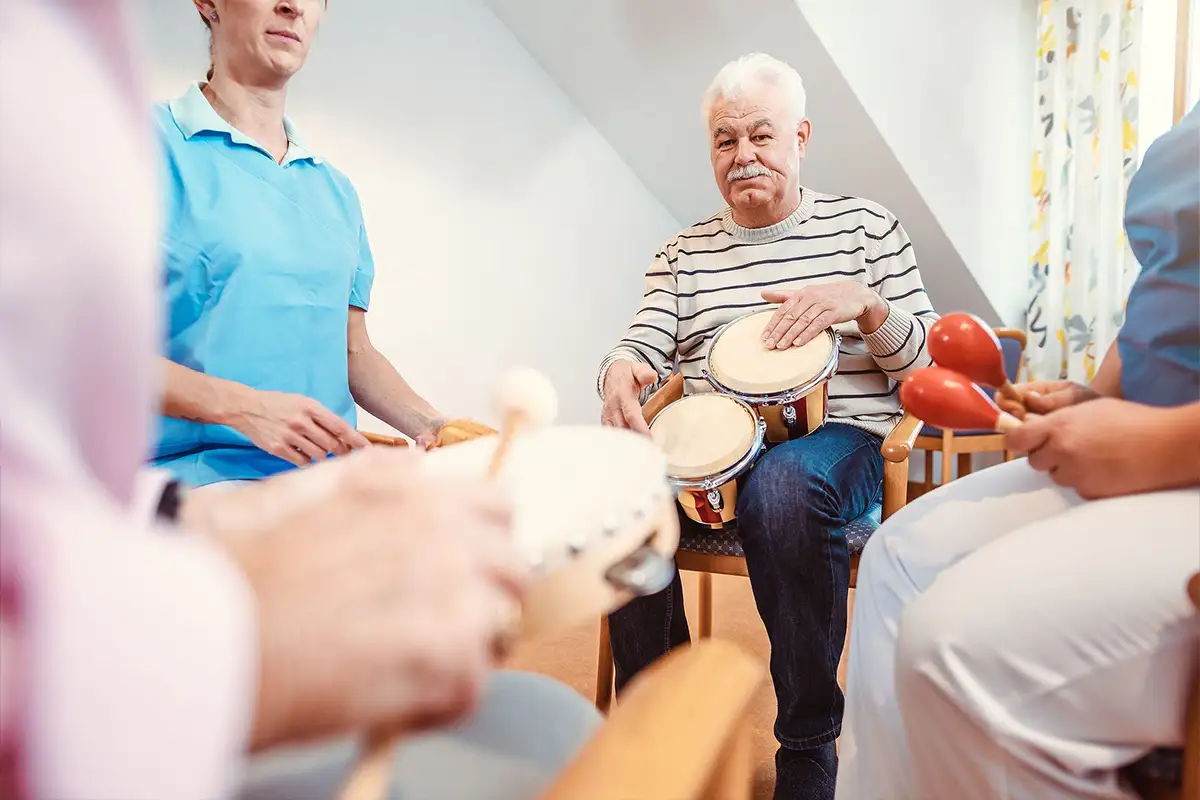
Music and Singing
Music has a direct connection to emotional memory.
Benefits:
- Evokes positive memories
- Reduces agitation and anxiety
- Improves mood
Even in advanced stages of Alzheimer’s, individuals may remember lyrics, rhythms, and melodies.
Creative Movement and Dance
Movement to music:
- Improves balance and coordination
- Reduces physical stiffness
- Strengthens the mind-body connection
It is not about choreography, but about safe and free movement.
Theater and Body Expression
Through gestures, role-playing, and simple dramatization:
- Stimulates imagination
- Reinforces identity
- Encourages social interaction
Cognitive Benefits of Art in People with Alzheimer’s
Artistic activities help to:
- Stimulate active brain areas
- Maintain cognitive functions for as long as possible
- Slow the progression of decline
- Reduce episodes of confusion
Although art does not cure Alzheimer’s, it significantly improves quality of life.
Emotional and Psychological Benefits
The emotional impact is profound.
Art:
- Reduces anxiety and depression
- Decreases aggressive behaviors
- Promotes calm and satisfaction
- Strengthens self-esteem
When a person creates something, they feel useful, heard, and valued.
Social and Family Benefits
Artistic activities encourage:
- Interaction with other residents
- Nonverbal communication
- Connection with family members during visits
For many families, seeing their loved one actively engaged restores hope.
The Artistic Approach at Serena
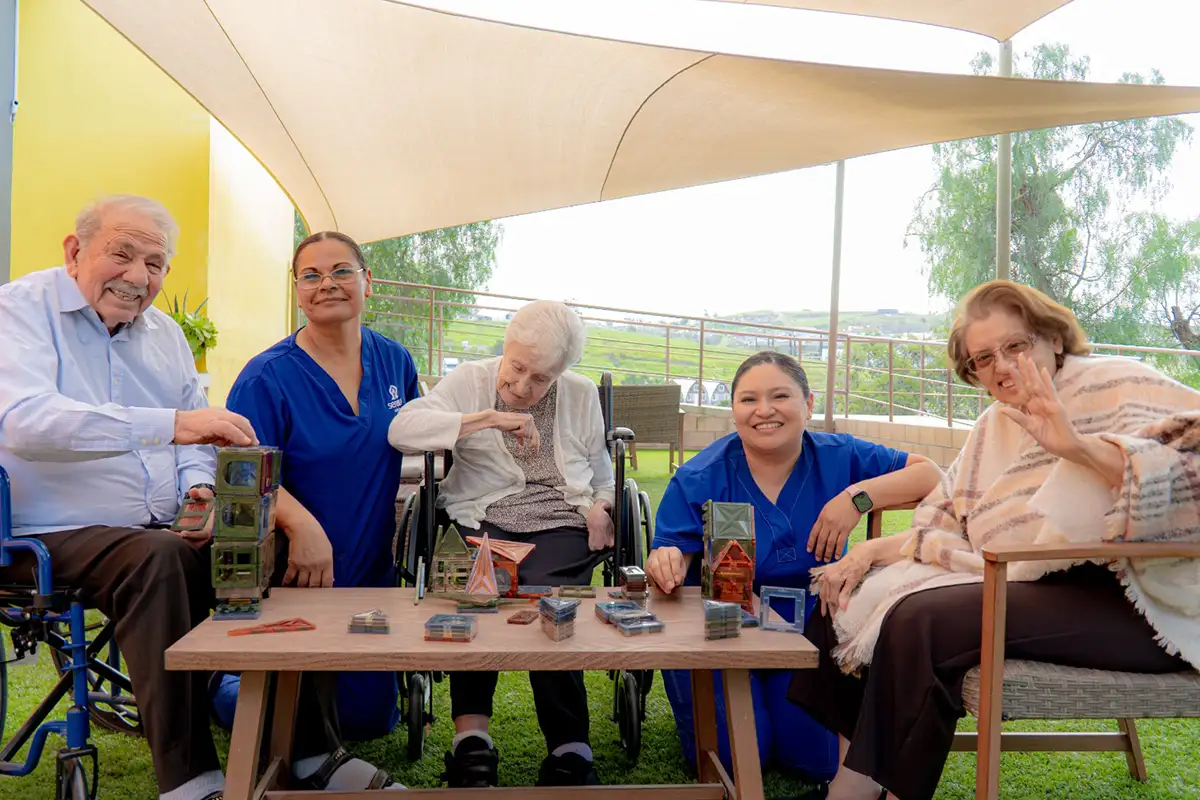
At Serena, artistic activities are an integral part of our Memory Care programs.
Our programs include:
- Guided art workshops
- Therapeutic music
- Conscious movement
- Sensory activities
- Individual adaptation based on cognitive stage
All activities take place in a safe, respectful, and compassionate environment.
Real Testimonial
“My mother barely spoke. One day, during a painting activity, she began to smile and choose colors. It was a moment we will never forget.”
— Family G., San Diego
Take the Next Step
If you are looking for an environment where your loved one receives meaningful cognitive stimulation and dignified care, art can make a difference.
Schedule a free evaluation with Serena. We will show you how our artistic programs are part of a comprehensive care approach.